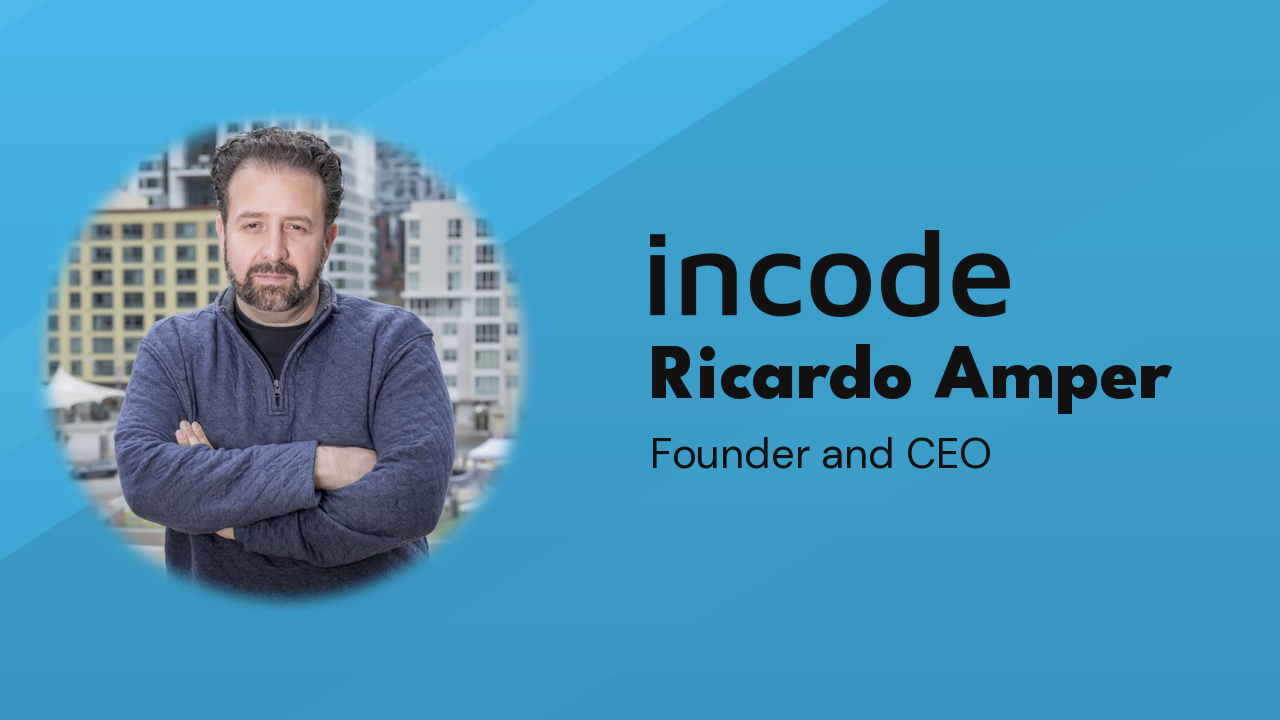
Ricardo Amper is Founder and CEO of Incode Technologies. CyberTech Edition sent him five questions about TrustGraph, Incode’s network for sharing fraud signals across financial institutions, and he answered them in writing.
The 53% figure comes from early access. How many institutions took part, which fraud types did it cover, and how did you measure “more fraud” against their existing models, including false positives?
Six Mexican financial institutions took part in the early-access program, covering approximately 400,000 identity verification sessions from December 2025 and January 2026. The program tested three TrustGraph categories designed to identify patterns that can be difficult to detect within a single institution:
- Suspected Repeat Fraudster: someone linked to a confirmed fraud attack returns with a different name, document, or device.
- Unusual Activity: the same document number appears with different faces, or the same face presents different documents. These patterns can indicate stolen or synthetic identities.
- Velocity: the same face, document, or device appears across applications at an unusually high frequency within a short period.
“More fraud” refers to additional fraud detected beyond the institution’s existing models. Incode ran a confusion-matrix analysis for each institution, comparing what its existing models detected with what TrustGraph found. At the best-performing institution, TrustGraph detected up to 53 additional fraud cases for every 100 detected by its existing models alone. We evaluate matching accuracy separately through controlled datasets, testing how reliably TrustGraph matches a face, document, or other identity data against records across the network.
Signals are matched without pooling records. What does an institution actually get back when it queries the network, and what can it work out about the institution that supplied the signal?
Queries are made through Incode. The institution receives a reason-coded signal identifying the type of activity detected and the attributes involved, such as a face, document, or device. The response does not identify the contributing institution or expose its customer records. The four fraud signal categories described here are:
- Suspected Repeat Fraudster: the current activity is linked to a previous fraud event confirmed by Incode’s fraud experts.
- First-party Fraud: the current activity is linked to fraud previously reported by another participating institution.
- Unusual Activity: the current activity conflicts with previously observed activity involving the same person or document. For example, the same document number has appeared with a different face.
- Velocity: the same face, document, or device appears at an unusually high frequency, such as repeated account-opening attempts across participating institutions within a short period.
The return signal does not reveal which participating institution contributed it or expose that institution’s customer records. TrustGraph provides the signal; the institution applies its own rules to approve, review, step up verification, or reject the application.
Signals are anchored to verified biometric identities. What happens to a legitimate customer wrongly flagged at one institution, and how is that corrected across the network?
We focus on preventing incorrect flags and correcting them quickly when they occur. TrustGraph provides the signal; each institution makes the decision.
Getting it right first
- Expert-confirmed fraud signals. Suspected Repeat Fraudster signals originate from sessions where Incode detected evidence of an attack, such as a deepfake, injected video, or tampered document, and our fraud experts confirmed the fraud.
- Anchored to the face. We only compare faces when we have a good-quality image, and each signal identifies the matching attribute. If a victim’s stolen document was previously misused, the document number may match without the face matching. That is different from the same face returning under a new name, and the signal helps the institution distinguish between the two.
- Observed before action is taken. New categories start in observation mode. Institutions can review the signals before setting rules that affect customer outcomes.
- Tested before release. TrustGraph follows the same release process Incode has used for its machine-learning models for years. Each change is tested on labeled data, then replayed against real traffic before release. Once in production, performance is monitored by release, country, and document type.
- Reviewed continuously. Our labeling team reviews samples of flagged sessions by institution, document type, and category to improve fraud detection while reducing incorrect flags on legitimate customers.
Fixing it fast
- Remove incorrect sessions. An institution can remove a session through the dashboard or API, excluding it from future checks at that institution and across the network.
- Tailor the checks. Institutions can disable specific attributes or checks for each customer journey, such as device checks where customers legitimately share devices. They can also set their own velocity thresholds and time windows.
- Exclude known-good devices. Institutions can exclude devices such as branch tablets from device-based checks in advance.
- Correct confirmed errors. If an entry underlying a Suspected Repeat Fraudster signal is found to be incorrect, Incode removes it.
Each query runs against the data held by participating institutions, so corrections apply from the next check. There is no central pool of customer records to update.
You project agentic fraud will reach 60% of attempts by the end of 2026. What data is that based on, and what do these attacks look like in practice compared with scripted bot fraud?
The 60% projection is based on trends in our production data. We analyze live verification traffic across multiple indicators: identity checks against official records; patterns detected by our machine-learning models across documents, devices, and selfies; and injection detections involving virtual cameras and emulated devices. We combine these findings with human labeling and threat intelligence from sources including Telegram, Signal, and the dark web.
Using a substantial labeled sample and a multilayered approach, including several methods developed by our internal Red Team to replicate attacks, we have tracked how fraudsters use AI to generate fraudulent content, find leaked data, and carry out attacks since 2022. The share of attempts showing adaptive, AI-driven behavior has grown steadily across these signals. Based on that trend, we project it will reach 60% by the end of 2026.
Fraudsters already use AI to generate synthetic media and identify targets. Agentic fraud takes this further: an autonomous software agent carries out the attack, rather than a human operator directing each step. The agent identifies targets, generates the synthetic media or documents it needs, submits them to verification systems, evaluates the results, and retries with adjusted parameters.
The key difference from scripted bot fraud is the feedback loop: the agent uses the results of failed attempts to adapt its approach on its own. It does more than repeat the same instructions at scale; it adjusts what it tries next. We believe that in 2027, we’ll see a major increase in fraud carried out end to end by agents, at a scale we haven’t seen before.
Competing banks have to agree to take part. What was the hardest objection from legal or compliance teams in early access, and what did you change in the product because of it?
When we first introduced TrustGraph to banks and compliance teams, they saw the potential of network intelligence to prevent fraud. Their hardest objection was protecting customer data while working with competing institutions. The questions were direct:
How do we protect customer data? What could another bank learn about our customers? If records are pooled, how do we honor deletion requests and other privacy rights? How do we retain control over our own data?
Those concerns shaped a core product requirement: compare signals across institutions without pooling, exchanging, or exposing customer records. Incode acquired Identiq, whose team had spent 10 years developing a distributed, privacy-preserving system. Combining that patented peer-to-peer cryptographic technology with Incode’s expertise in biometrics and identity verification enabled us to build TrustGraph around that requirement.
Each bank’s customer records remain separate and are not pooled with other banks’ data. Banks retain full control of their own records and can add, update, or delete them at any time. At the same time, TrustGraph performs real-time, zero-knowledge queries across the participating network to retrieve up-to-date fraud signals wherever they originate, without exposing the underlying customer records.
Privacy-preserving technologies, including secure multi-party computation, make that possible. They allow institutions to benefit from network intelligence while retaining control of their customer records and supporting their compliance and information security requirements. What began as the biggest objection became one of TrustGraph’s strongest selling points.