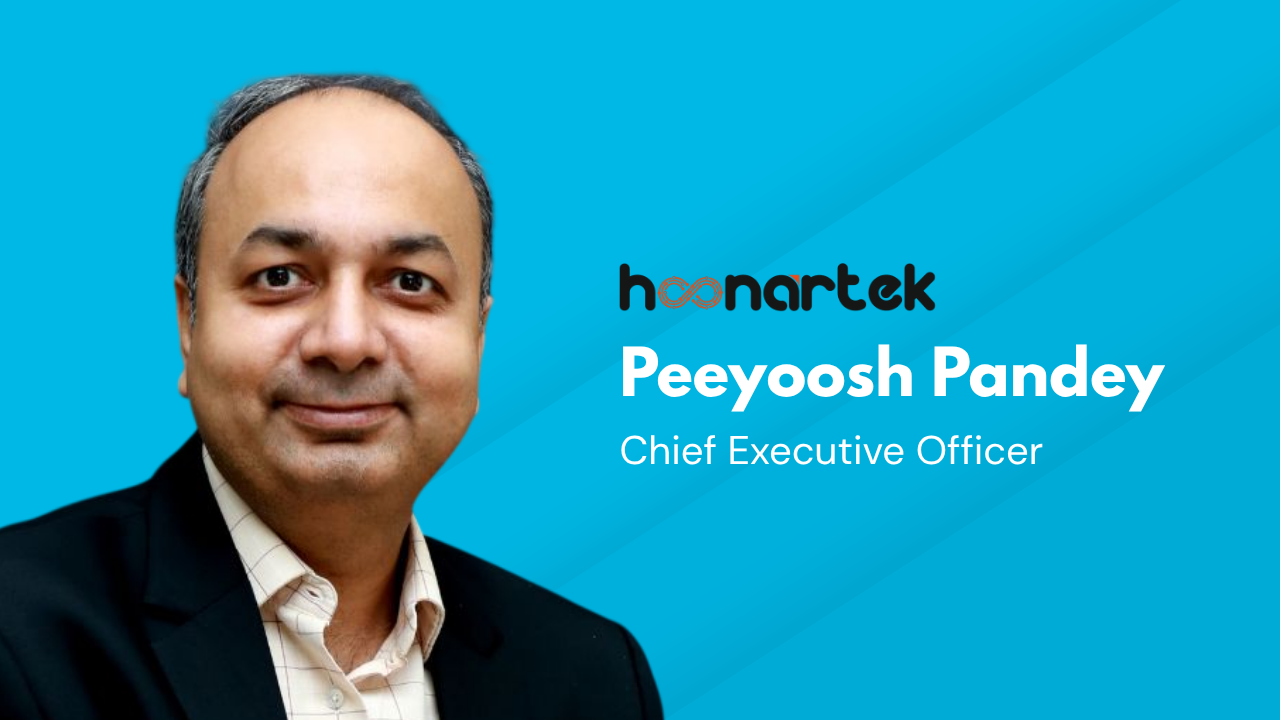
1. AI adoption seems to be the hottest topic in enterprise transformation today. At the same time, most companies are still doing pilots and PoCs. What do you think is the reason for not integrating AI into the business model completely yet?
Peeyoosh: The gap is not AI capability; it is organisational readiness. Enterprises still struggle to connect AI to trusted data, business processes primarily designed for human intelligence, governance and accountable decisions. Pilots prove what is possible. Production requires changing how the enterprise operates, and that is a much harder problem than building another successful proof of concept.
2. As AI becomes capable of making and executing decisions, what do you think needs to change about the way enterprises are architected?
Media Partner
Peeyoosh: For forty years, we have used computers to automate execution while leaving judgment outside the system — a human looking at a screen and deciding what should happen next. That single design choice shaped every enterprise architecture we have today: systems built to execute, not to decide. The architectural change now is to stop treating judgment as something that only happens outside the system, and start designing for where decision logic lives, how it is governed, and how much autonomy it earns over time.
3. Hoonartek has been talking about elevating the decision layer, hollowing the core. Can you elaborate on this a little?
Peeyoosh: Hollowing the core means separating execution from intelligence. Keep the core as the system of record, but move decision logic, context and orchestration into a governed enterprise layer above it. That makes decisions reusable, explainable and adaptable, while allowing the core to continue doing what it does best: executing transactions and maintaining the record. It’s the practical expression of moving from automation to provisional, bounded autonomy — you earn more autonomy for the layer as it proves itself, without ever touching the core.
4. What do you think enterprises are getting wrong about agentic AI today?
Peeyoosh: I think we’re at risk of confusing autonomy with intelligence. Giving an agent more freedom doesn’t automatically make it more useful. The harder work is giving it the right context, clear policies, access to the right data and an understanding of when to act, when to escalate and when not to act. Enterprise autonomy has to be earned. Take invoice processing. An agent can read an invoice, match it to a purchase order and flag an exception. But should it approve the payment? It needs the contract, goods receipt, vendor history, approval policy and cash position. That context sits across systems. The mistake is building autonomous agents before solving the context and decision layer underneath them.
5. Conversational AI is finding so many use cases across industries today. What is Hoonartek’s thinking around it? Can you talk about a major success you have seen on this front?
Peeyoosh: We see conversational AI as a way of putting governed intelligence closer to the people making decisions. For example, with Databricks Genie, we are helping enterprises move from asking for reports to interrogating their data directly. Our Pharma Operations work is a good example: conversational access to operational intelligence can shorten the distance between a question, an insight and an action.
6. Data cloud platforms like Databricks and Google Cloud have made big announcements in the recent past, at conferences like Data+AI Summit, Google Next etc. How is Hoonartek geared to leverage these new products and features to help enterprises?
Peeyoosh: At Hoonartek, we don’t chase announcements; we translate them into enterprise capability. Our job is to understand where a new platform capability can solve a real business problem, then turn it into a repeatable, production-ready pattern. Our Databricks and Google Cloud accelerators, Brickbuilder solutions and AI capabilities are examples of how we shorten that journey from platform innovation to measurable business value.
7. While data foundation is table stakes, a lot of LOB-related data & analytics work is increasingly focusing on individual personas at leadership levels, like CFO, CRO, CHRO etc. What is your take on it?
Peeyoosh: The data foundation is necessary, but it isn’t the destination. The real question is: who needs to make which decision? A CFO shouldn’t have to assemble five reports to understand cash, working capital or profitability. A CHRO needs a different lens on workforce intelligence; a CRO needs one on customers and revenue. The underlying data can be common, but the intelligence has to be contextual — which is exactly why we design the decision layer around personas rather than around data domains.
8. Hoonartek has increasingly positioned itself around IP and reusable solutions. Why is that important to you?
Peeyoosh: Because services alone don’t compound. If we solve the same class of problem repeatedly, we should capture what we have learned and turn it into intellectual property, accelerators and reusable decision models. That lets us bring more experience to every engagement and reduce delivery risk. More fundamentally, it moves us from selling effort to creating differentiated, repeatable enterprise capability.
About Peeyoosh:
Peeyoosh Pandey, CEO of Hoonartek, is a passionate business leader with nearly 30 years of industry experience and a proven track record of building businesses for scale. He is a veteran of the IT services industry, having worked with industry leaders like Persistent Systems, Wipro and TCS. In his previous stint, Peeyoosh served as SVP & Head of Sales for APAC and MEA at Persistent Systems. Apart from building deep executive relationships and long-standing customer engagements, Peeyoosh excels at managing stakeholders across verticals including BFSI, Healthcare, Manufacturing and ISV, with a focus on Data & AI driven digital transformation.