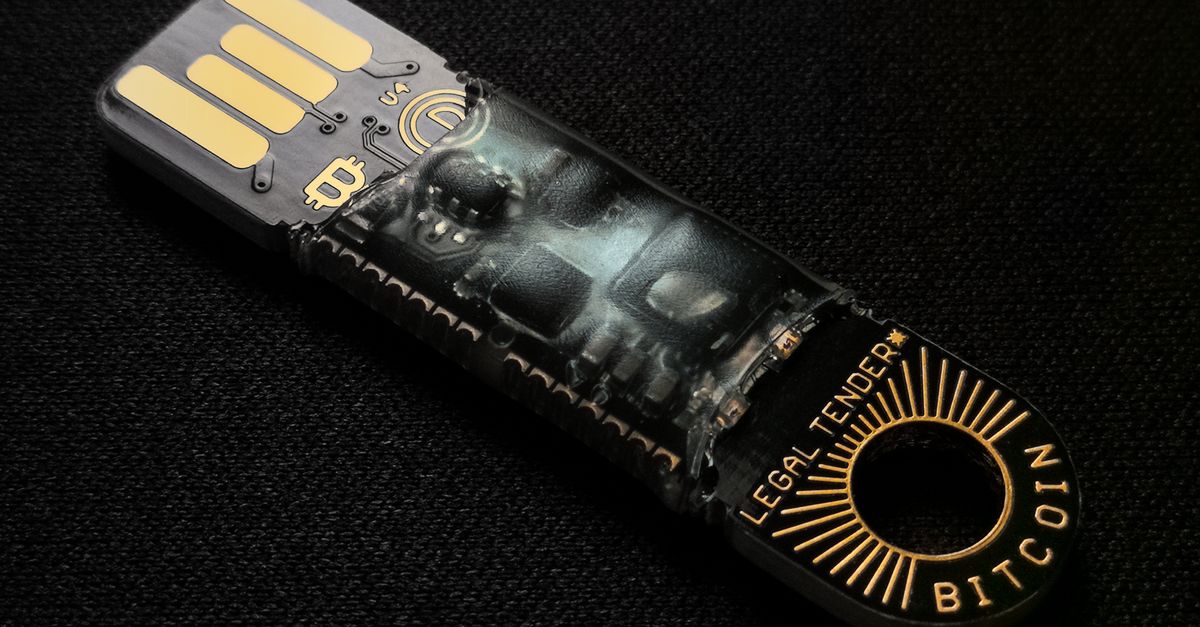
Coinkite, maker of the Coldcard hardware wallet, published a security advisory on July 30, 2026 warning that seeds generated on affected devices may carry insufficient cryptographic randomness, a flaw that traces back to a March 2021 firmware change and was only caught after attackers drained roughly $70 million in Bitcoin in the days before the advisory.
Per Coinkite’s advisory, Mk2 and Mk3 devices running firmware 4.0.1 through 4.1.9 combined the device-generated seed with any dice rolls a user supplied, but produced insufficient entropy unless the user manually entered at least 50 independent dice rolls, a step most users skip. Mk4, Mk5, and Q devices on earlier firmware generated roughly 72 bits of entropy instead of the expected 128 bits. Coinkite has shipped fixed firmware across all affected model lines and says devices set up without dice-roll entry and without a unique BIP-39 passphrase are the ones at risk; it is telling affected users to update firmware, generate an entirely new seed, and migrate funds.
The instructive part for security teams is not the bitcoin loss, it is the five-year detection gap. A weakened random-number-generation path shipped in a 2021 firmware update and was not caught until attackers found and exploited it in production, the same failure mode that threatens enterprise key-management and HSM deployments: entropy assumptions baked into firmware at certification time are rarely re-verified afterward, and a flaw there stays invisible until someone attacks it instead of audits it. CyberTech has reported on a similarly long-lived firmware weakness, a two-decade-old IPMI flaw, showing this pattern is not unique to consumer hardware.