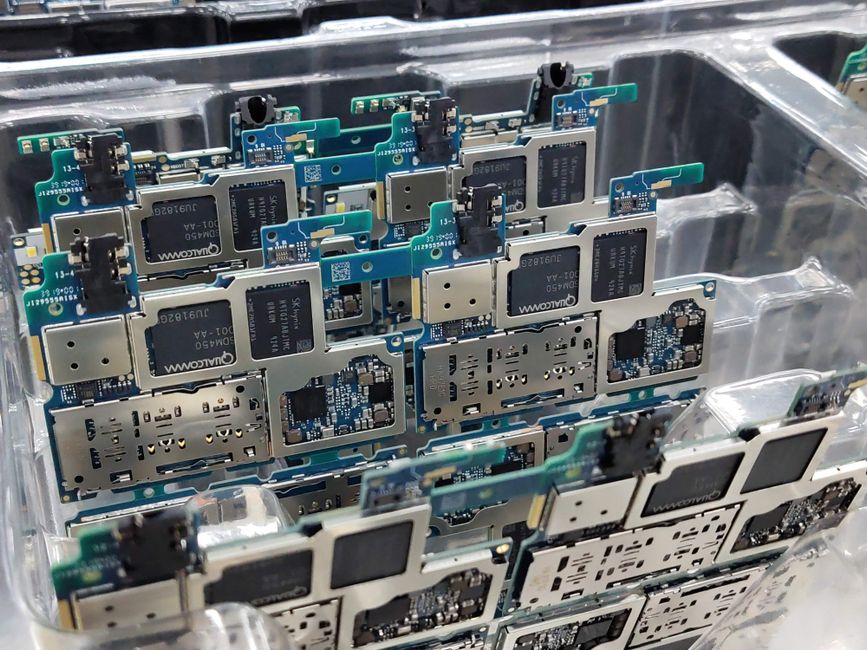
Five outlets covered Bitdefender’s Midnight Mimosa research on firmware-level malware in budget Android phones, and they agree on almost every fact. They differ on what the malware is for, who the advice is aimed at, and whether the companies that could fix it have answered.
What the coverage agrees on
Bitdefender Labs published the research. It describes malware that sits in the system partition of low-cost Android phones built on MediaTek platforms, observed on thousands of unique devices in more than 150 countries over roughly two years. Mexico, France and Italy lead the country list, followed by the United States, Germany, Brazil and Spain.
Help Net Security led with the owner’s position: the phones arrive with the malware and it cannot be uninstalled. It carried Bitdefender’s line that “The compromise is complete before the phone is first switched on.” SecurityWeek called it a supply-chain threat and stressed persistence, system-level privileges and scale. Security Affairs framed preinstalled malware as a separate threat class from app-store malware. BleepingComputer and eSecurityPlanet reached the same place from different headlines.
Most of the accounts repeat the same operational details from the report: a system app that impersonates Android packages, at least 32 disguised apps installed and removed on demand, 13 apps on Google Play that carry the same ad-fraud code, and a step where the malware switches the Play Store off before some installs. When five outlets reproduce the same facts from one primary, the agreement shows the report was clear and adds no independent confirmation.
Where the accounts differ
The sharpest split is the purpose of the malware. Bitdefender says the scheme is “likely designed mainly to generate revenue,” and lists ad and click fraud, data collection and residential-proxy use. The outlets weight those differently.
BleepingComputer puts residential proxies in its headline, but its body centers on ad fraud. It reports Bitdefender’s finding that the system app does not itself register the fraudulent impressions and clicks, and that revenue comes from cover apps that load ads. It also reports that Bitdefender’s test device received no relay targets, so active traffic forwarding was not verified. eSecurityPlanet describes Midnight Mimosa as an ad-fraud operation, and says components can register devices with proxy infrastructure but that registration is not evidence of relaying. SecurityWeek lists ad fraud, click fraud, proxy-network abuse and botnet building as the goals. Security Affairs counts residential-proxy relays among the revenue paths.
A reader who sees only the BleepingComputer headline would think the phones are proxy nodes today. A reader who sees only eSecurityPlanet would think they are not. Bitdefender’s own wording sits between the two: the capability is present, and the confirmed revenue path is ad fraud.
The second difference is the audience for the advice. eSecurityPlanet leans toward buyer caution, such as avoiding suspiciously cheap phones that claim flagship specifications. Security Affairs addresses defenders and says that blocking specific package names is not enough because attackers can change them, so detection should key on behavior. Bitdefender addresses neither. In the report’s words, “The durable fix sits with the vendors and the marketplaces that ship and sell the affected firmware.” The report is credited to Bitdefender Labs researchers Adrian Mihai Gozob and Alex Baciu, a junior security researcher at Bitdefender, and that sentence is its remediation conclusion.
What none of the coverage supplies
The third difference is who has answered. BleepingComputer, SecurityWeek, Security Affairs and eSecurityPlanet each carry no statement from the device makers or from Google. BleepingComputer reports that the manufacturers have not publicly explained how the malicious code entered the firmware, and that some users say firmware updates resolved their infections.
Bitdefender is careful about attribution. It says it can confirm that firmware on affected devices was signed with certificates bearing one company’s name, and that it cannot say how those certificates reached the phones or whether the certificate owner was involved in or aware of the malware deployment. The report says the code could have been introduced by an original design manufacturer, a firmware integrator, a logistics partner or another party in the supply chain. We do not name the company here, for the reason Bitdefender gives: a certificate name is not a finding of fault. The chain of custody between chip and customer has several handoffs, and the report cannot say at which one the code arrived.
The coverage also differs on how much it asks of the people holding the phones. Bitdefender is plain that “Remediation cannot rely on uninstall,” and that clearing a device takes firmware-level cleanup or disabling the component over ADB, which the report calls unrealistic for most owners. Advice to buyers therefore arrives after the purchase, when it can do nothing for the device already in the drawer.
What it adds up to
Our through-line is that the five stories describe a problem with no obvious owner. The malware is not on the device because the user did something wrong, so user education cannot reach it. It sits below the app layer, so app-store review and Play Protect do not see it. It arrives through a chain of companies, none of which is quoted in the coverage we read. The reports agree on the facts and differ on emphasis because the facts do not point at anyone who can act.
We described the same shape in our reporting on GhostAction, where two maintainer accounts gave access to 345 repositories, and on the tensorlake npm release that carried a credential-stealing worm. In each case the compromise arrived through something already trusted. The difference with phones is that the buyer has no way to inspect the upstream at all.
What it means for the security leader
For an enterprise, the exposure sits mainly with unmanaged or lightly managed phones. Staff who use a low-cost handset for multi-factor prompts, messaging or work email carry an app layer that mobile management can inspect and a system layer that it cannot. Help Net Security reports that the malware holds Accessibility, Notification Access and SMS permissions, which Bitdefender did not see used in its analysis. That matters for exactly that case, because those permissions sit on the path that one-time codes travel.
Three actions follow from our reading of the coverage. These are our recommendations.
- Set a device-procurement rule for anything that touches corporate identity. Phones bought through unknown marketplaces, or sold with flagship specifications at a fraction of the price, do not qualify for MFA enrollment or work profiles.
- Ask your mobile management vendor which device-integrity signals it checks at enrollment and whether it can refuse devices that fail them. If the answer relies on app inventory alone, the system partition is outside the check.
- Add behavioral indicators to your hunt list instead of package names. Security Affairs makes the same point from Bitdefender’s analysis: the operators rotate package names and payload hashes.
What to check next time
When the next vendor report on preinstalled malware lands, check three things before reading the headline: what the report confirms as active, what it lists as capability, and whether any party in the supply chain has answered on the record. In this case the first two are separated cleanly in the primary, and the third is empty in every account we read. Until a manufacturer or marketplace explains the firmware, the practical control sits with the enterprise: decide which handsets are allowed near identity, and enforce it at enrollment.
Source: Bitdefender Labs