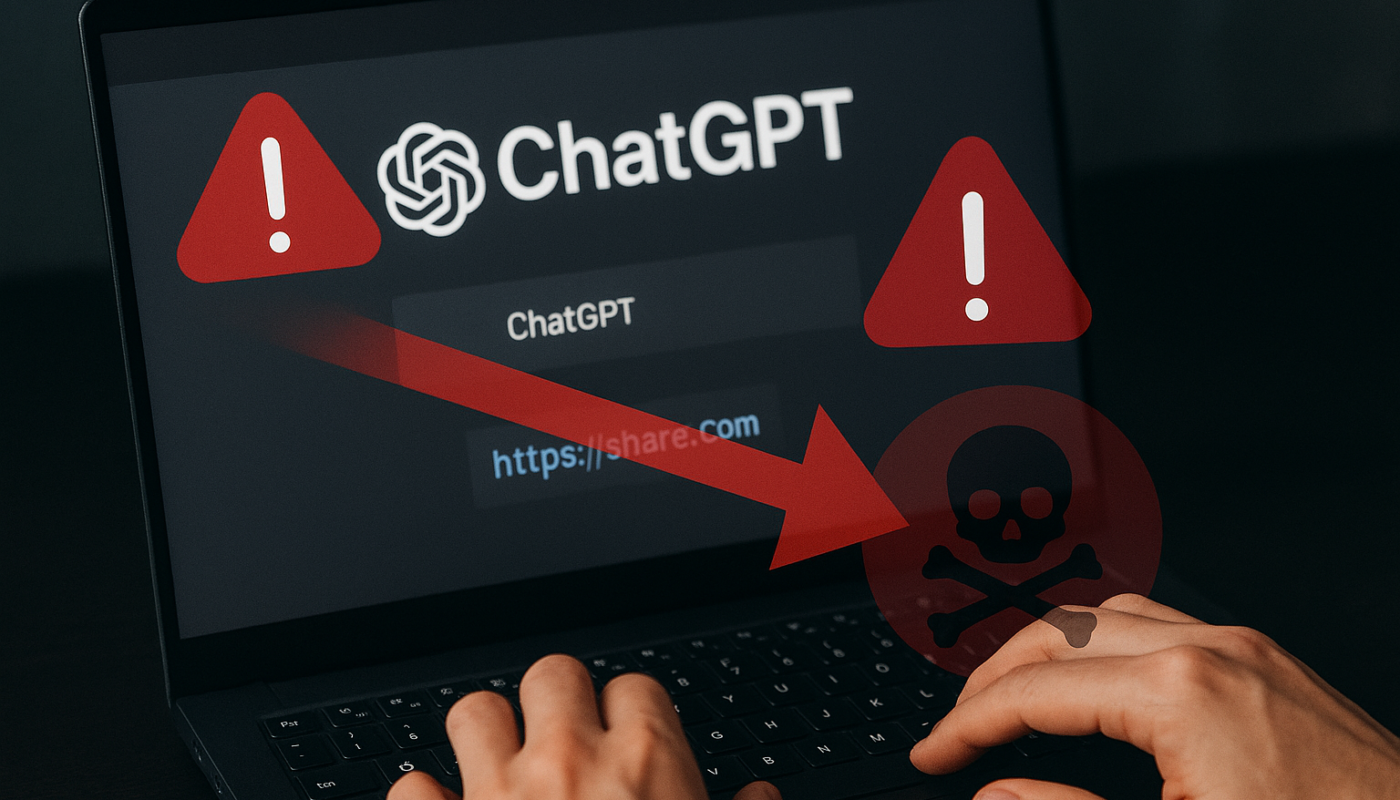

Threat actors are taking advantage of ChatGPT’s share link feature to distribute malware and create fake outage pages, according to recent reports. Attackers are leveraging the platform’s trusted domain to trick users into downloading harmful software or convincing them the service is temporarily unavailable.
The share link feature, originally intended to simplify sharing ChatGPT conversations, has been repurposed to build persuasive phishing pages. By hosting pages on the official chat.openai.com domain, attackers make their pages appear more credible and increase the likelihood that victims will follow malicious instructions.
These malicious links often masquerade as legitimate service notifications, such as outage alerts, and prompt users to download software purportedly needed to restore access or resolve the issue. The approach takes advantage of user trust in well-known domains to lower users’ guard.
Media Partner

Security researchers have documented multiple instances where such links redirect users to third-party sites that distribute trojans, remote access tools and other forms of malware. Using a trusted domain can help these pages evade some spam filters and complicate detection efforts by security teams that rely on domain reputation.
An analyst from cybersecurity firm SecureWatch said, “Attackers exploiting trusted platforms like ChatGPT’s share links represent a significant escalation in social engineering tactics. The inherent trust users place in these domains is being weaponized to bypass traditional security controls.”
The implications for enterprises and security teams are significant. Organizations should refresh threat intelligence feeds, enhance phishing detection mechanisms to identify malicious content originating from legitimate service domains, and run user education campaigns that stress caution even with links hosted on well-known platforms.
Vendors evaluating anti-phishing solutions should prioritize tools that perform dynamic content analysis and contextual assessment rather than relying solely on domain reputation. As attackers refine their delivery methods, defenders must adapt detection and response strategies to maintain effective protection.
Source: bleepingcomputer.com