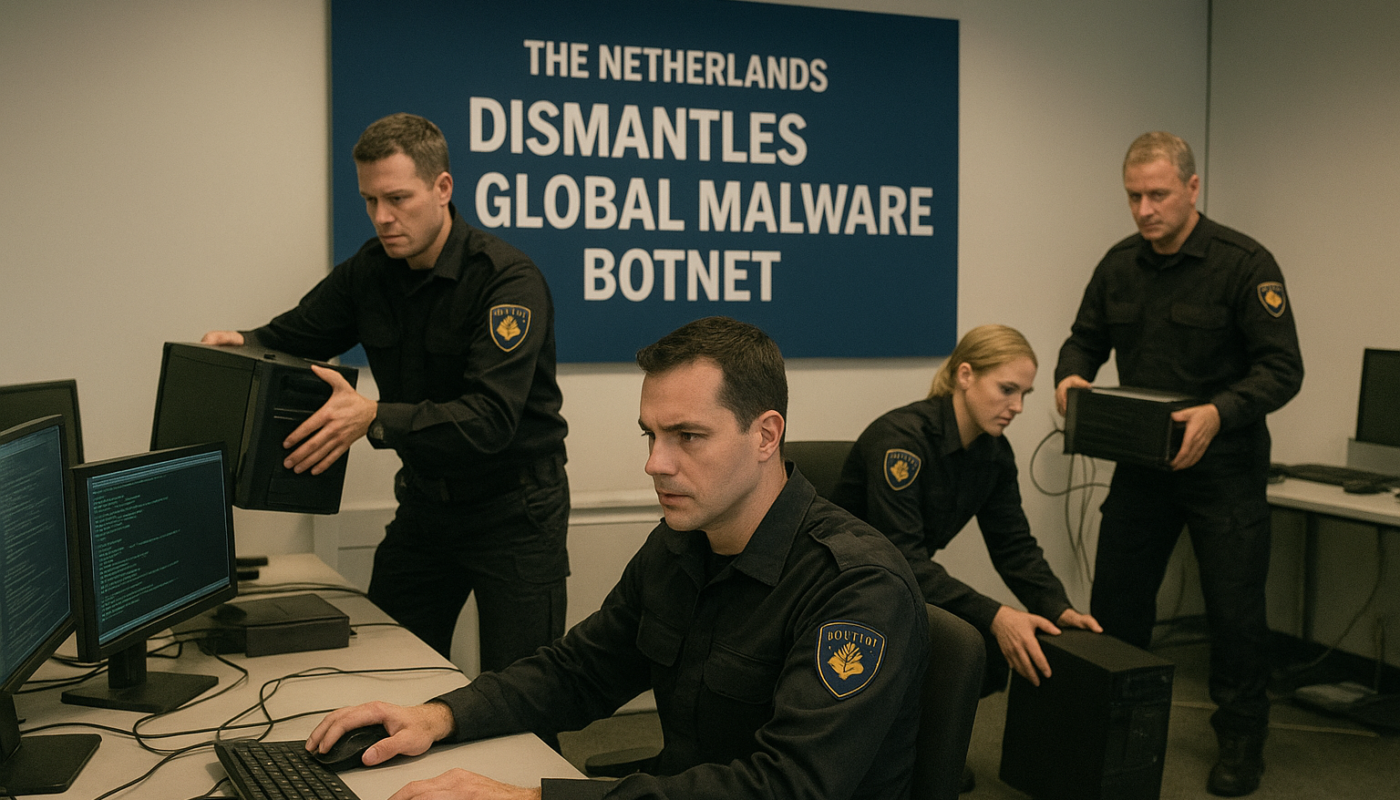

The Dutch government successfully dismantled a massive malware botnet that had compromised around 17 million devices worldwide. This action was part of a coordinated effort with international law enforcement to tackle cybercriminal activities like distributed denial-of-service (DDoS) attacks and data theft. The botnet, which had been operational for several years, was identified through collaboration between Dutch authorities and global cybersecurity agencies. It had infected a diverse range of devices, from personal computers to Internet of Things (IoT) devices, by exploiting outdated software vulnerabilities and weak default passwords. The widespread nature of the infection posed a significant threat to both individual users and corporate networks, potentially causing large-scale disruptions and financial losses.
In their efforts to neutralize the botnet, law enforcement officials conducted a series of raids and seized command-and-control (C2) servers crucial to the botnet’s functionality. These servers enabled cybercriminals to issue commands to the infected devices worldwide, coordinating malicious activities with precision. By taking down these servers, authorities effectively cut off the botnet’s communication channels, rendering it inactive.
A spokesperson from the Dutch National Police highlighted the essential role of international collaboration in combating such threats, stating, “This operation underscores the necessity of international partnerships and timely intelligence sharing to dismantle sophisticated cybercrime infrastructures.” The operation also involved private cybersecurity firms that contributed technical expertise and real-time threat intelligence, illustrating the importance of public-private partnerships in cybersecurity.
Media Partner

The dismantling of this botnet underscores the ongoing challenges in securing the increasing number of internet-connected devices. Many compromised systems were found to lack basic security measures, such as timely software updates and robust authentication protocols. This incident serves as a reminder for organizations to prioritize vigilant cybersecurity practices and for vendors to ensure secure default configurations.
For security technology buyers and chief information security officers, this operation serves as a case study in the effectiveness of coordinated responses to large-scale threats. As enterprises look to detect and mitigate similar botnet infections proactively, there may be increased demand for vendors offering threat intelligence and automated response capabilities. The takedown also highlights the need for robust legal and operational frameworks to support international cybercrime enforcement.
As botnets continue to grow in complexity and scale, the success achieved by the Dutch authorities demonstrates that multi-agency collaboration is a crucial element in the global fight against cyber threats.
Source: bleepingcomputer.com