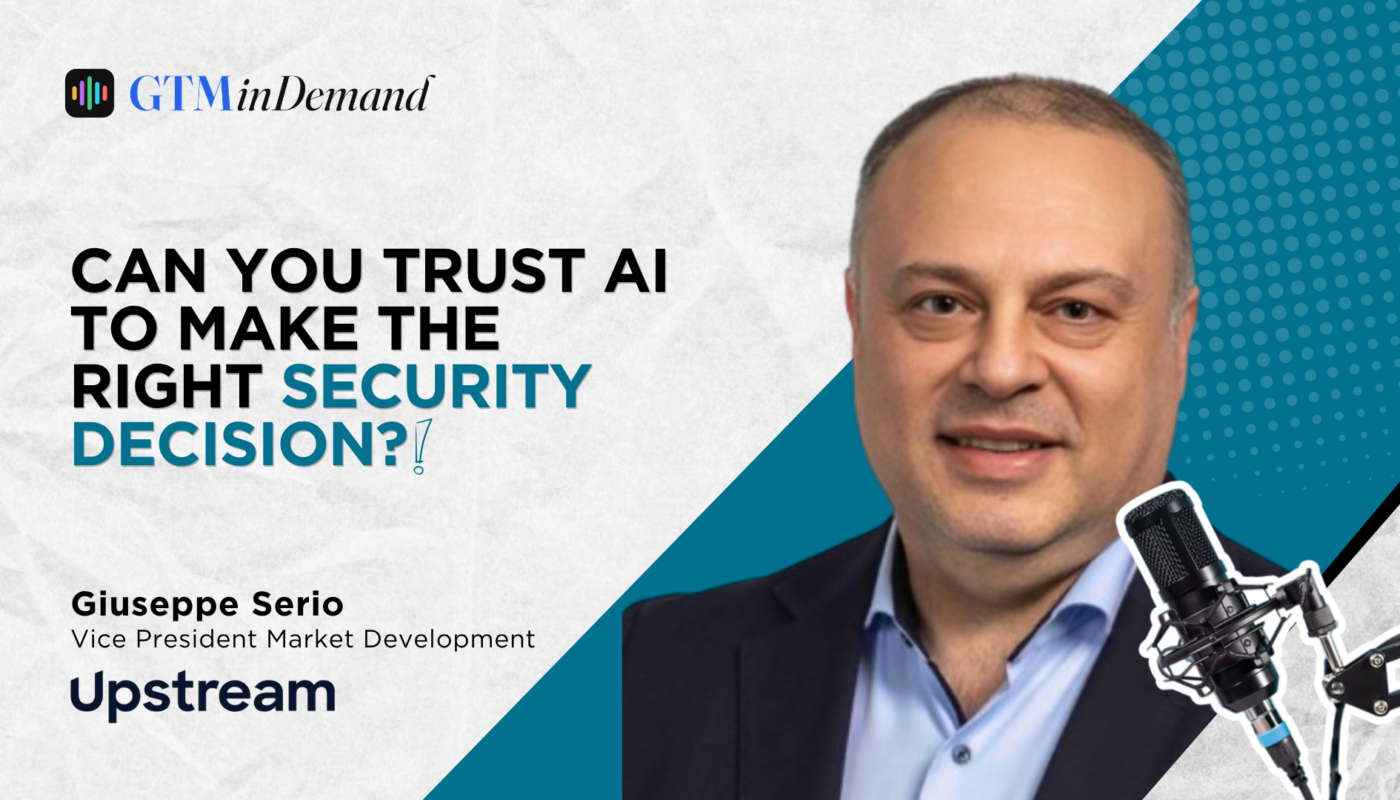
As artificial intelligence takes on a growing role in cybersecurity, organizations are facing a new challenge: how to make security decisions with greater context and confidence.
In this episode of CyberTechEdition, we speak with Giuseppe Serio of Upstream about the shift from isolated security events toward a more connected understanding of threats, behaviors, and operations.
Media Partner
Giuseppe explains why individual alerts often provide only part of the picture, and why security teams need to connect signals, understand behavioral patterns, and evaluate the broader context behind an event. The conversation explores how this approach can help organizations move beyond simply asking whether an action is technically allowed toward understanding whether the overall operation can be trusted.
The discussion also examines the growing security implications of physical AI. As AI becomes increasingly connected to vehicles, machines, drones, robots, and other physical systems, cybersecurity decisions can have consequences beyond the digital environment. Giuseppe discusses the role of live digital twins in providing greater visibility into an asset’s state, relationships, and behavior within its environment.
Another key theme is fragmentation. With technology, data, and security teams often operating across separate systems, organizations can struggle to build a complete picture of what is happening. Connecting these elements can provide the context needed to identify meaningful signals and make more informed security decisions.
From AI-driven security to physical AI, digital twins, behavioral intelligence, and cyber resilience, the conversation explores how cybersecurity is evolving—and why trust and context will become increasingly important as AI takes on a greater role in security operations.